

Amid fiscal austerity and digital demands, a UK government department successfully embraced Technology Business Management (TBM) through IBM Apptio. This shift improved financial oversight and enabled agile decision-making, transforming IT into a strategic partner. The initiative led to reduced reporting labor, enhanced visibility, and proactive optimization, offering valuable lessons for public sector efficiency.

The healthcare sector faces growing challenges in securely managing and transferring vast amounts of sensitive data. IBM Aspera, provided by Seven Four Digital, revolutionizes data transfer with its fast, secure protocols, enabling efficient collaboration between institutions. This technology enhances patient care and supports timely, compliant data sharing across the GCC.
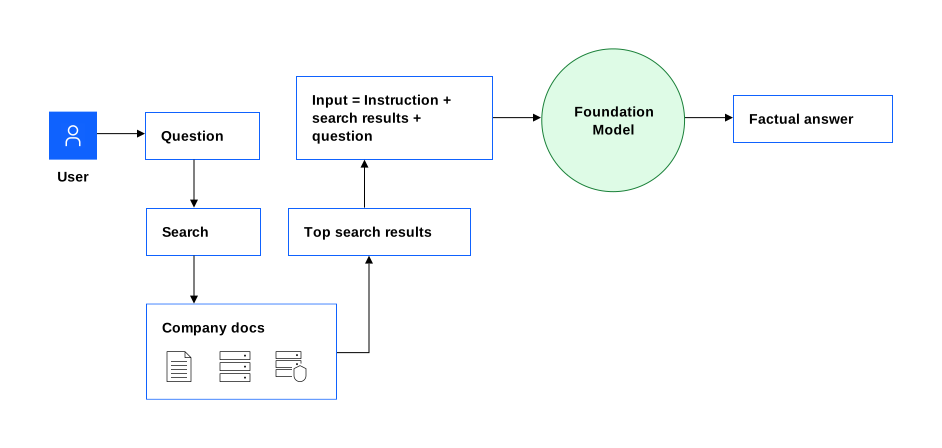
Retrieval-Augmented Generation (RAG) enhances text generation by combining generative AI with real-time data retrieval. It improves response relevance and reliability by accessing external knowledge sources. RAG is beneficial across various sectors, including healthcare and finance, facilitating efficient and accurate outputs while addressing challenges like data quality and prompt clarity.

The shift towards multi-cloud strategies is crucial for enterprises in the UAE and Middle East, enabling data sovereignty and compliance through local data centers. Implementing FinOps practices optimizes cloud spending, while scalable solutions cater to AI workloads and fluctuating demands. Multi-cloud enhances resilience, reducing risks associated with vendor lock-in and outages.

IKEA introduced an AI chatbot, Billie, to handle customer inquiries. Billie took on 47% of these interactions. Yet, instead of cutting jobs, IKEA chose a different route, retraining 8,500 employees and unlocking an impressive $1.4 billion in new revenue.

The financial services industry is transforming due to cloud technology adoption. Efficient management of cloud costs is crucial for compliance and optimization. FinOps and IBM Cloudability help institutions ensure spending aligns with regulations and strategic goals.

Organizations in the GCC are increasingly adopting cloud platforms for scalability and innovation, but face challenges in managing cloud costs. FinOps, aided by IBM Cloudability, emerges as a vital framework for optimizing cloud spending while ensuring compliance with regulatory standards and improving financial accountability in sectors like finance, healthcare, and energy.

The financial sector faces challenges in data transfer due to legacy systems. IBM Aspera’s high-speed, secure solutions enhance compliance and efficiency, crucial for competitive advantage in real-time decision-making.

As AI transforms economies, the EU faces regulatory challenges balancing innovation and ethics. Striving for responsible AI, the EU must avoid stifling innovation while learning from adaptable regulatory approaches in the Middle East.

A biopharmaceutical company enhanced its drug trial processes using digital twin technology, addressing challenges like complex trial designs and patient recruitment, resulting in significant time savings and cost reductions.

This case study illustrates how a multinational consumer goods company overcame supply chain challenges by implementing AI solutions, enhancing forecasting accuracy, reducing costs, improving visibility, and transforming organizational culture.

A leading manufacturing company implemented a comprehensive sustainability strategy, achieving a 30% reduction in carbon emissions, significant energy savings, and a 40% decrease in landfill waste, enhancing brand reputation.

A finance company in the UK launched an Agile PMO to transition to product-centric operations, improving agility, collaboration, and customer focus while ensuring compliance with strict regulatory standards.

A leading aviation company established a Technology Business Management (TBM) Office to enhance transparency and resource allocation, aligning IT with business objectives, ensuring compliance, and fostering a culture of data-driven decision-making for improved efficiency.

A major American bank collaborated with Seven Four Digital to create a training program for new graduates, focusing on technical skills and agile methodologies to enhance workforce readiness and retention amid digital transformation.
A leading EU bank modernized its legacy systems by migrating to the cloud with Seven Four Digital’s assistance, enhancing operational agility, compliance, and cost efficiency through FinOps practices and strategic implementation.

A life sciences company, facing challenges in long development cycles and compliance, partnered with Seven Four Digital to implement the SAFe framework, enhancing agility, collaboration, and regulatory adherence, improving product outcomes.

Seven Four Digital enhances business efficiency by integrating IBM Aspera, a high-speed data transfer solution that ensures rapid, secure, and scalable data movement tailored to specific organizational needs.
Technology Business Management (TBM) enhances communication between IT and finance, fostering collaboration and transparency. It aligns technology investments with business goals, optimizing costs and maximizing value for strategic decision-making.

In today’s evolving business landscape, financial institutions must align technology investments with strategic goals. Seven Four Digital’s Technology Business Management approach enhances cost transparency, operational efficiency, and regulatory compliance, enabling effective technology management in the GCC region.

A global pharmaceutical company transformed its R&D processes by implementing a unified digital platform and fostering collaboration, resulting in enhanced efficiency, improved compliance, and a culture of continuous learning and adaptability.

A defense contractor integrated sustainability and ESG practices to enhance competitiveness for a multinational bid, addressing regulatory compliance, stakeholder expectations, and supply chain complexities, resulting in improved performance and culture.

A global airline with 52,000 employees faced software development challenges. It initiated a digital transformation emphasizing Agile, DevOps, and CI/CD practices, enhancing delivery speed, quality, collaboration, and an innovative culture.

